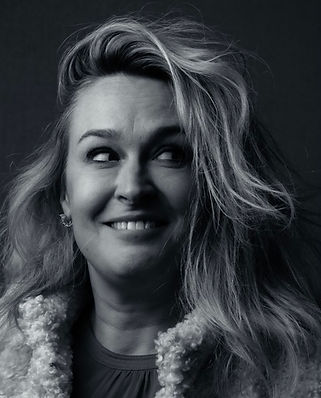
Willemijn Sieffers
about
My work begins with looking.
I am drawn to moments when light, colour, form and composition suddenly come together and something ordinary becomes extraordinary. My response is instinctive. Something I see moves me, and I feel an immediate need to photograph it — to hold on to what I saw and felt in that moment.
After more than thirty years of working with photography, much of this happens intuitively. I do not begin with a concept and then search for an image to illustrate it. The image comes first.
My subjects range from landscapes and trees to portraits, but the starting point is always the same: an image that moves me and continues to resonate.
From photograph to toyobo
Not every photograph becomes a Toyobo. In fact, only a small number do. A photograph has to stay with me — visually and emotionally — and I have to sense that there is something more to discover within it.
For me, Toyobo is not simply a printing technique. It is a second encounter with the image.
Through the slow, physical process of exposing the photopolymer plate, developing it, working the ink into the plate and printing it by hand, I return to the photograph. I explore whether I can deepen what first moved me: the light, the atmosphere, the beauty, the mystery and the emotional layers within the image.
Sometimes the result becomes stronger than the photograph I started with. The nuances of a single ink colour can give a contemporary image a sense of depth, stillness and timelessness — almost as if it carries a history of its own.


Landscape, Toyobo photopolymer print
Portrait, Toyobo photopolymer print
MEMORY, TIME AND AN UNKNOWN PAST
My way of looking is also shaped by something deeply personal.
My family history is connected to Indonesia, the Second World War and the Japanese internment camps. My grandfather died before I knew him, and my father was born after the war. Since my father's death, I have become increasingly aware of the questions I can no longer ask and the parts of my family's history I may never fully know.
This history is not the subject of every work I make. I do not photograph landscapes in order to tell my family's story.
But it has shaped my sensitivity to time, memory and the feeling of recognising something I have never known.
Sometimes a place I have never visited before can give me an unexpected sense of coming home. Sometimes, through the Toyobo process, a contemporary landscape seems to belong to another time. In those moments, an image can unexpectedly touch that unknown history.
Nature plays an important role in my work. I am particularly drawn to trees: they outlive us, connect generations and embody the regenerative force of nature. But above all, I am drawn to visual beauty — to what light can reveal in something we might otherwise simply pass by.
My personal story does not need to be known in order to experience my work.
I want the image to work first.
To make someone stop and look.
And then, perhaps, to evoke a feeling, a memory or a meaning entirely their own.
The toyobo process


